
November 2026 · Tools
3 Brushes, 3 Hair Types: The Ones I Actually Use
Clients ask me about dryers and products all the time. Almost nobody asks about the brush, and then they go home and fight their hair with the wrong one. These are the three I reach for, matched to the hair they are actually for.
By Cris, licensed cosmetologist and owner of CRIS HAIR
A brush is not a generic tool. The brush that glides through thick hair will shred fine hair, and the gentle brush that protects damaged hair will take forty minutes to dry a dense head. When a client tells me her blowout never looks like it does in my chair, the product is rarely the whole story. Very often she is drying her hair with a brush that was never made for it. So here is my station, simplified: three hair types, three brushes, and why each one earns its place.
Fine hair: GHD Natural Bristle Round Brush, 1.3 inch
Fine hair needs grip without violence. Natural bristle holds the strand gently and distributes tension along the hair instead of concentrating it on a few plastic pins, which is where fine hair snaps. The small 1.3 inch barrel is the other half of the choice: fine hair wrapped around a big barrel just slides off and dries flat, while the smaller barrel actually creates the bend that reads as body. If your hair is fine and your blowouts fall in an hour, check your barrel size before you blame your hair. Most of the time, the brush was too big and too harsh at the same time.
Thick hair: GHD Ceramic Vented Round Brush, 2.1 inch
Thick hair has two problems: volume of water and volume of hair. The vents in this barrel let the dryer's air pass through the section instead of bouncing off it, which cuts drying time where thick hair needs it most. The ceramic holds heat evenly, so each pass smooths instead of just pushing hot air around, and the 2.1 inch barrel takes a section big enough to keep the job moving. On dense hair, a small brush is not more precise, it is just slower, and slow means more heat passes, more frizz and arms that give up before the back is dry. This is the brush that finishes the job.
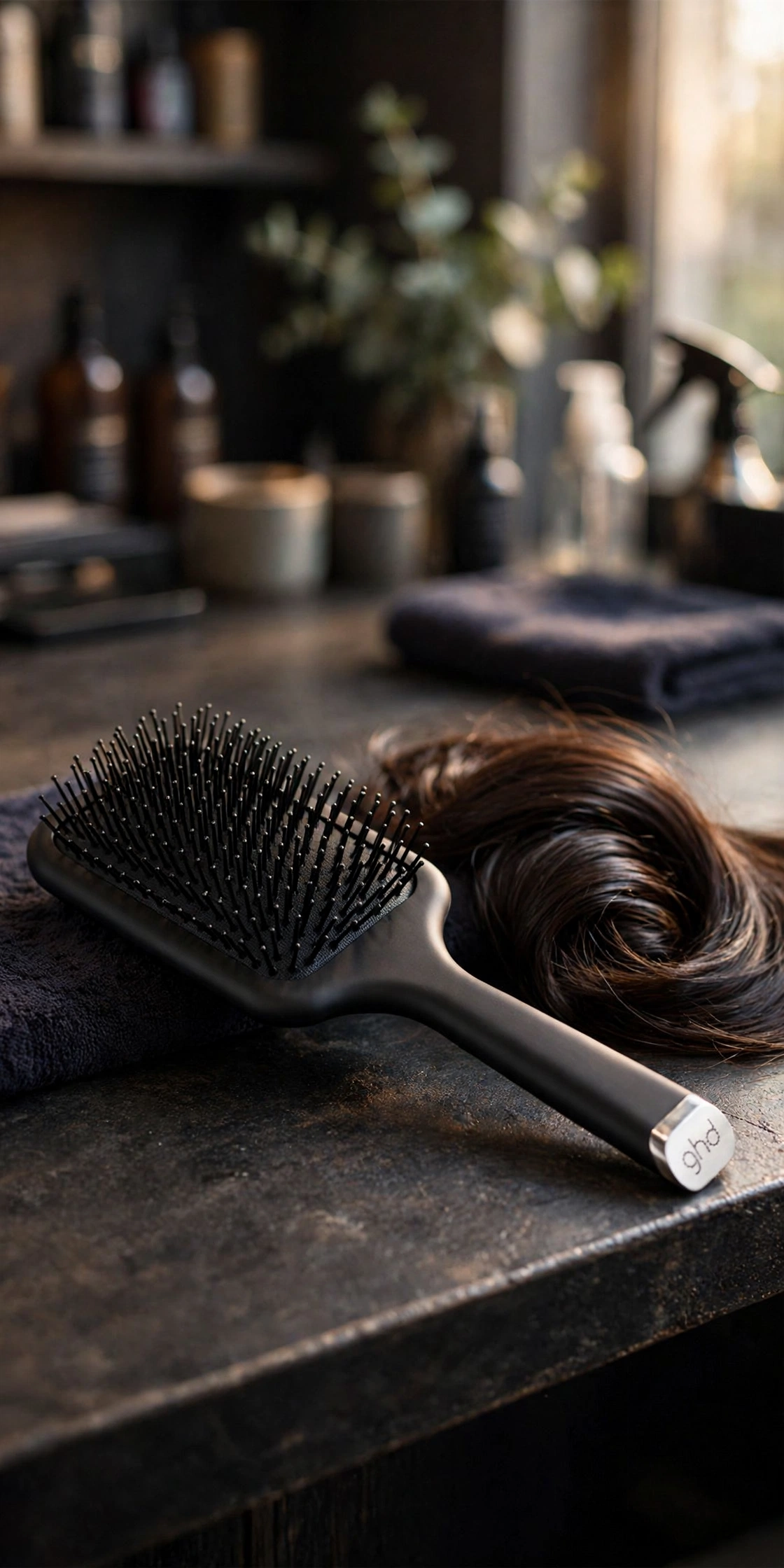
Damaged hair: GHD The All Rounder Paddle Brush
When hair is fragile, my priority changes from styling to not breaking what is left. A cushioned paddle brush has a wide, soft surface that detangles and smooths with the tension spread out, instead of the concentrated pull of a round brush on hair that is already snapping. I use it to dry damaged hair most of the way, gently, in the direction it will live, and only then decide if the ends can take a finishing pass with a round brush. Some days they cannot, and the paddle finish is the finish. Hair that is recovering does not need to be styled harder. It needs tools that respect its current limits, the same patience I ask for in a careful blow dry.
Also on my station
The other three in my collection have their jobs. The larger GHD Natural Bristle Round Brush, 2.1 inch, is for longer hair that still wants the gentle bristle. The Olivia Garden Nanothermic is my thermal round brush for resistant hair that needs heat to cooperate. And the Leonor Greyl Care Brush is the daily brush, the one for dry hair in the morning and before bed, more ritual than styling. Six brushes sounds like a lot until you watch each one do the job the others should not.
The two-minute habit that saves every brush
Whatever brush you own, pull the hair out of it after every use and wash it with shampoo every few weeks. A brush coated in old product, dust and loose hair is redepositing all of it onto clean hair, and then clients tell me their hair never feels clean. It was clean. The brush was not. This tiny habit is the difference between a tool that helps your hair and a tool that quietly works against it.
Frequently asked questions
Can one brush work for everyone in my house?
It can work, the way one shoe size can work. A medium paddle brush is the safest shared option, but fine hair will lose body and thick hair will lose time. If two people with very different hair share one brush, the paddle is the compromise I would pick.
How do I know my barrel size is wrong?
If your hair slides off the brush and dries flat, the barrel is too big for your length and density. If you need endless passes and your arms tire before your hair dries, it is too small. The right size holds a section with gentle tension and dries it in a few passes.
Are natural bristles worth it on fine hair?
On fine hair, yes, more than on any other type. The grip is gentler and more even, and fine hair shows breakage faster than any other kind. It is the one upgrade fine-haired clients feel in the first blowout.
When should I replace a brush?
When bristles bend, melt or go missing, when the cushion cracks, or when it keeps snagging no matter how clean it is. A worn brush damages hair on every pass, and no product compensates for a tool that has expired.
The brushes in this post
All six brushes I use live in one collection, the fine, the thick and the damaged picks above plus the rest of my station. These are tools I use and recommend but do not stock in my shop, so the collection opens on ShopMy, where you buy directly from the retailer.
This post contains affiliate links.