
October 2026 · Hair Care
Leave-In Conditioner for Winter: How New England Hair Survives the Season
Indoor heat, freezing wind and hat static are a specific kind of attack. Here is the one product category that answers all three, and how to actually use it.
By Cris, licensed cosmetologist and owner of CRIS HAIR
Every winter, around the first real cold week, the same conversation starts in my chair. "My hair feels like straw." "It is static all day." "It breaks when I brush it." New England winter is not one problem for hair. It is three problems taking turns, and if you live here, you already know all of them by name.
Outside, the wind is freezing and dry. Inside, the heating runs all day and pulls what little moisture is left out of the air, and out of your hair. Then you pull a hat or a scarf over it, and the friction gives you static that no amount of patting down fixes. Dry air, dry heat, friction. By February, hair that was fine in October feels fragile, dull and impossible to brush. This is exactly the season leave-in conditioner exists for, and it is the product I watch clients either use wrong or skip entirely. Let me fix both.
What a leave-in actually does
A rinse-out conditioner works for the two minutes it sits in your hair in the shower, and then most of it goes down the drain. A leave-in stays. That is the whole point, and in winter it matters more than any other time of year, because the attack does not happen in your shower. It happens at 7 AM when you walk to your car in the wind, and at your desk under the heating vent, and when the hat comes off at lunch.
A good leave-in does four jobs at once. It puts back a light layer of moisture that dry air keeps stealing. It detangles, so you are not tearing a brush through fragile, dry ends, which is where most winter breakage actually comes from. It smooths the surface of the hair, which is what calms frizz and a good part of the static. And most good leave-ins include heat protection, so your blow-dryer and hot tools stop adding their own damage on top of the weather's. It is not a styling product pretending to care. It is the base layer everything else sits on.
The one I reach for in the studio
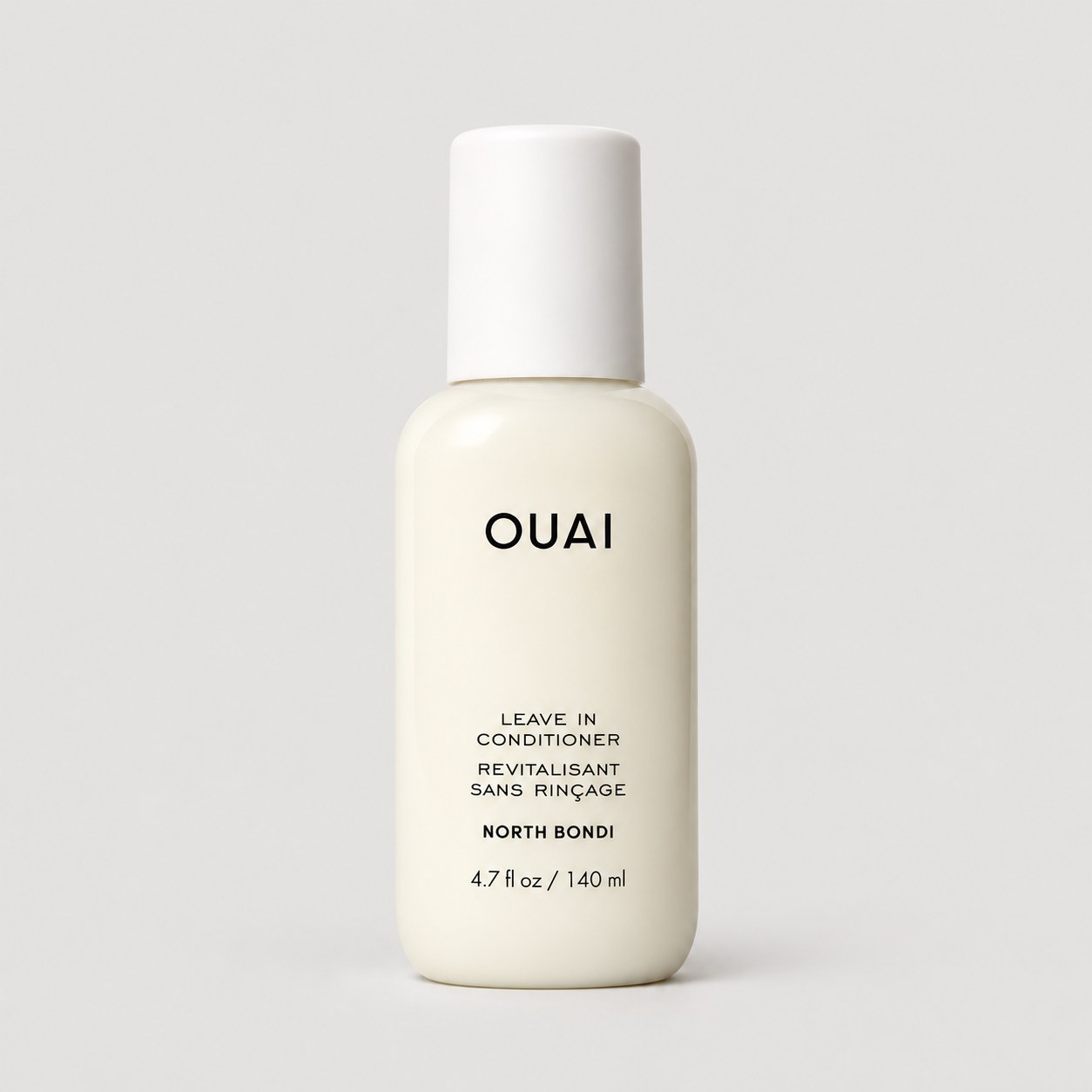
The leave-in I use on my clients all winter, and the one I send home with them, is the OUAI Leave In Conditioner. It detangles, protects and smooths in one step, which sounds simple until you have watched a client try to brush out dry, tangled February hair without it. It is light enough for fine hair, which matters, because the most common leave-in mistake I see is a product so heavy that fine hair gives up and goes flat by noon.
If your hair is lightened or damaged, your winter base layer is different: the K18 Leave-In Molecular Repair Mask is the repair step I build into my blondes' routines, because winter dryness on already-lightened hair is where breakage turns into a haircut you did not plan. Some of my clients use both, K18 on wash days as the treatment, the OUAI as the daily detangle and protect. And for the static that survives everything, a drop of hair oil pressed over the ends at the very end is the finishing move. Oil is the seal, not the meal: it locks in what the leave-in put there.
How to use it (where most people go wrong)
Apply it to damp hair, right after washing, before anything else. This is the step people rush. Hair that has already dried has already lost the water the leave-in is supposed to seal in.
Use less than you think. A few sprays for fine hair, a few more for thick hair, worked through the mid-lengths and ends. Not the roots. Leave-in on the scalp is how hair ends up looking dirty by the second day, and it is the reason half the women who tell me "leave-in weighs my hair down" actually just put it in the wrong place.
Comb it through with a wide tooth comb or your fingers, starting from the ends. Then your heat protectant if yours is a separate product, then style as usual. On non-wash days, a light mist on dry ends before you go out into the cold is a legitimate refresh, especially before the hat goes on. And one winter rule from my chair: never brush dry, static, winter hair aggressively and call it detangling. Dampen it slightly or add your leave-in first. February breakage is quiet. You notice it in April and blame the spring haircut.
Your winter hair routine, in one paragraph
Wash gently, condition in the shower, leave-in on damp hair every single wash, oil on the ends when static wins, and a mask on Sundays if your hair is lightened or dry. That is it. Winter here is four months long. Your hair does not need a new personality to survive it, it needs a base layer and a little consistency. The OUAI Leave In Conditioner is in my shop, and if you are not sure whether your hair needs the daily leave-in, the K18, or both, that is exactly what a consultation is for. Bring me your February hair. We will build its winter plan.
Frequently asked questions
Can I use leave-in conditioner every day?
You can use it every wash, and a light amount on dry ends between washes when winter static hits. What you should not do is layer fresh product over old product for days without washing. Build-up makes hair dull and heavy, which is the opposite of the goal.
What is the difference between leave-in conditioner and regular conditioner?
Regular conditioner works in the shower and rinses out. A leave-in stays in the hair, so it keeps protecting you where winter actually happens: in dry heated rooms, in the wind, and under hats. In winter I want my clients using both, they do different jobs.
Does leave-in conditioner protect from heat?
Many do, including the OUAI Leave In I use in the studio, and that protection matters more in winter because most of us blow-dry more and air-dry less when it is freezing. Check your bottle. If yours does not protect, use a separate heat protectant before hot tools.
Will leave-in make my fine hair flat?
Not if you choose a light spray formula and keep it on the mid-lengths and ends, away from the roots. Fine hair is usually the hair that benefits most in winter, because it shows static and dryness first. The flatness people blame on leave-in is almost always too much product, in the wrong place.
My hair is bleached. Is leave-in enough for winter?
Leave-in is your daily base, but lightened hair usually needs a repair step too. That is why I pair blondes with the K18 Leave-In Mask on wash days: it works on the broken bonds inside the hair while the leave-in handles moisture, detangling and protection outside it.
Give Your Hair Its Base Layer
The OUAI Leave In Conditioner I use on my own clients all winter, detangle, protect and smooth in one step.
Shop the Leave-In