
October 2026 · Hair Color
Reverse Balayage: When Your Blonde Went Too Far (and the Fix Needs No Lightener)
How lowlights and a root melt give over-lightened hair its depth back, with no bleach and the softest grow out
By Cris, licensed cosmetologist and owner of CRIS HAIR
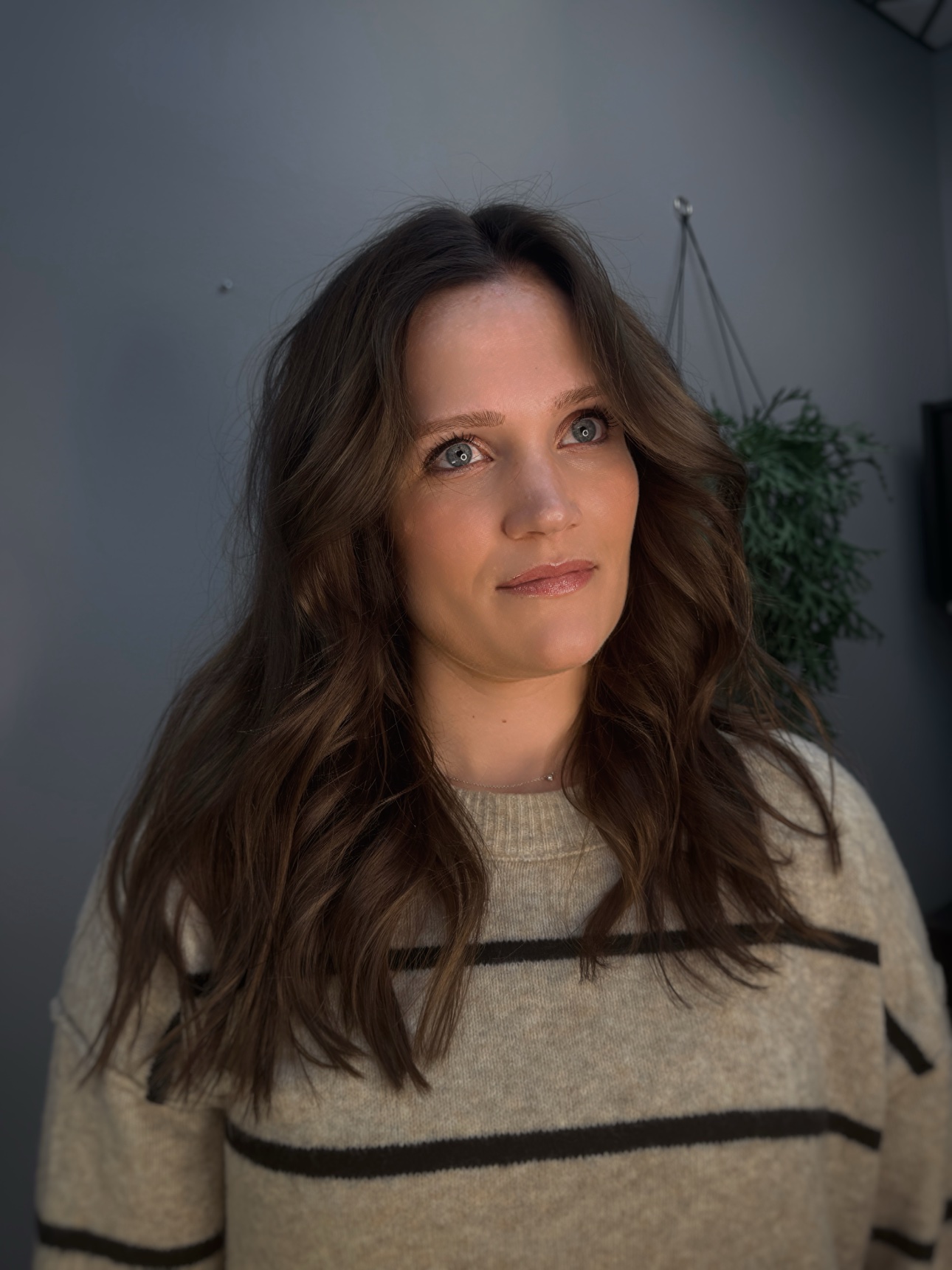
There is a moment I watch for in my chair. A blonde client sits down, runs her fingers through her hair, and says some version of the same sentence: "I do not know what happened. It just stopped looking like me." The blonde did not fail her. It simply went further than her face, her skin and her life ever asked it to. Too light, too flat, too much of one note, and every photo started looking a little washed out.
This post is about the way back, and the good news first: the way back does not need more lightener. It is called reverse balayage, and it is exactly what the name promises. Regular balayage paints light into the hair. Reverse balayage paints the depth back in.
What reverse balayage actually is
Instead of lifting, we deposit. I weave lowlights, strands colored back toward your natural depth, through the over-lightened hair, and melt the root so your own color becomes the top of the gradient again. The blonde you keep stops being the whole story and becomes what it was always meant to be: the accent. Dimension is not darkness for its own sake. It is contrast, light next to depth, and contrast is what makes hair look expensive and faces look awake.
Nothing in this service lightens a single strand. For hair that has been lifted a lot, that is not a small detail. It is the whole point.
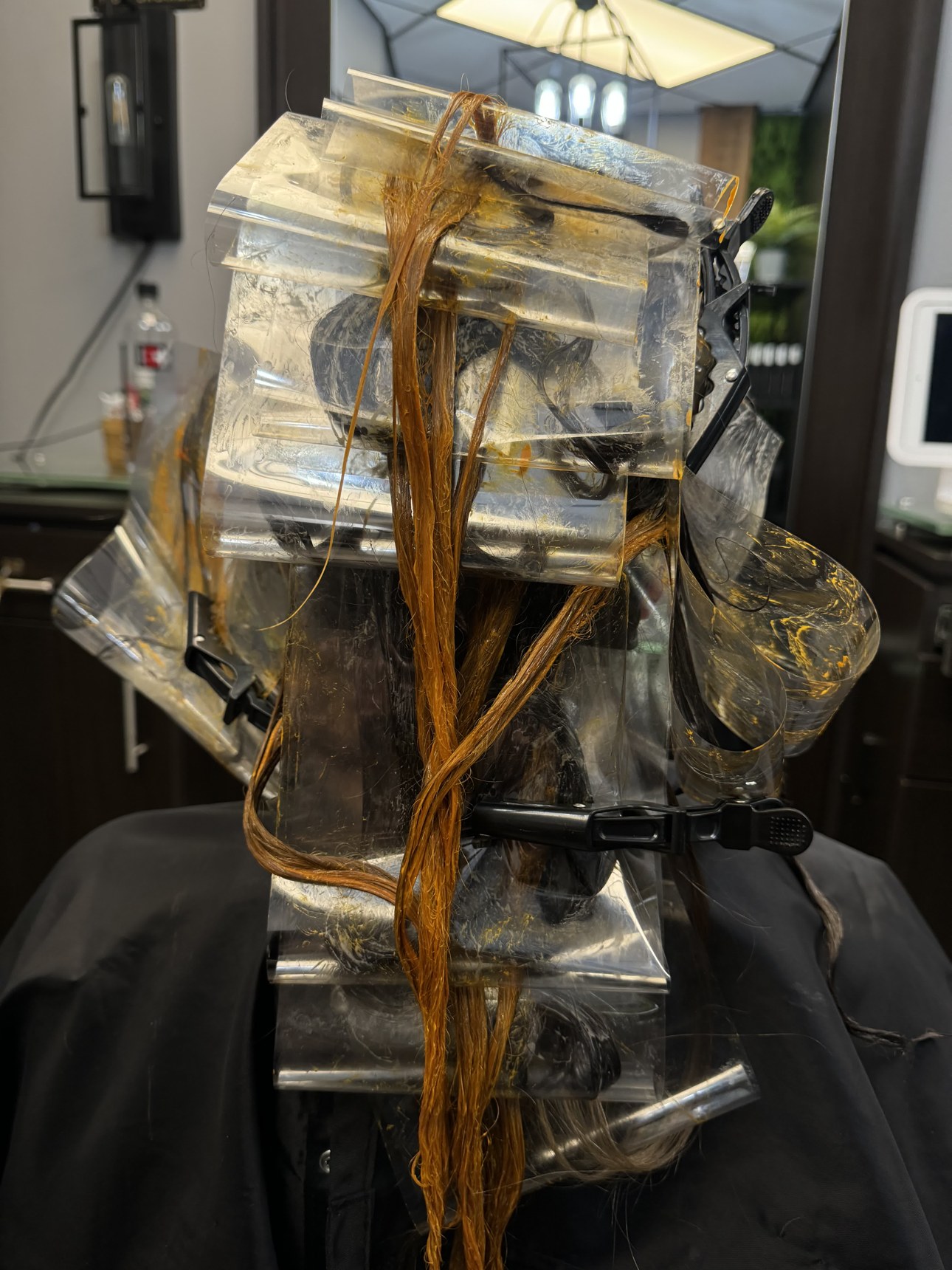
The case in these photos
Rachel's before photo is at the top of so many of my conversations this fall: blonde from root to ends, pretty in the way a postcard is pretty, and completely flat against her skin. She did not want to "go brunette." She wanted to look like herself again.
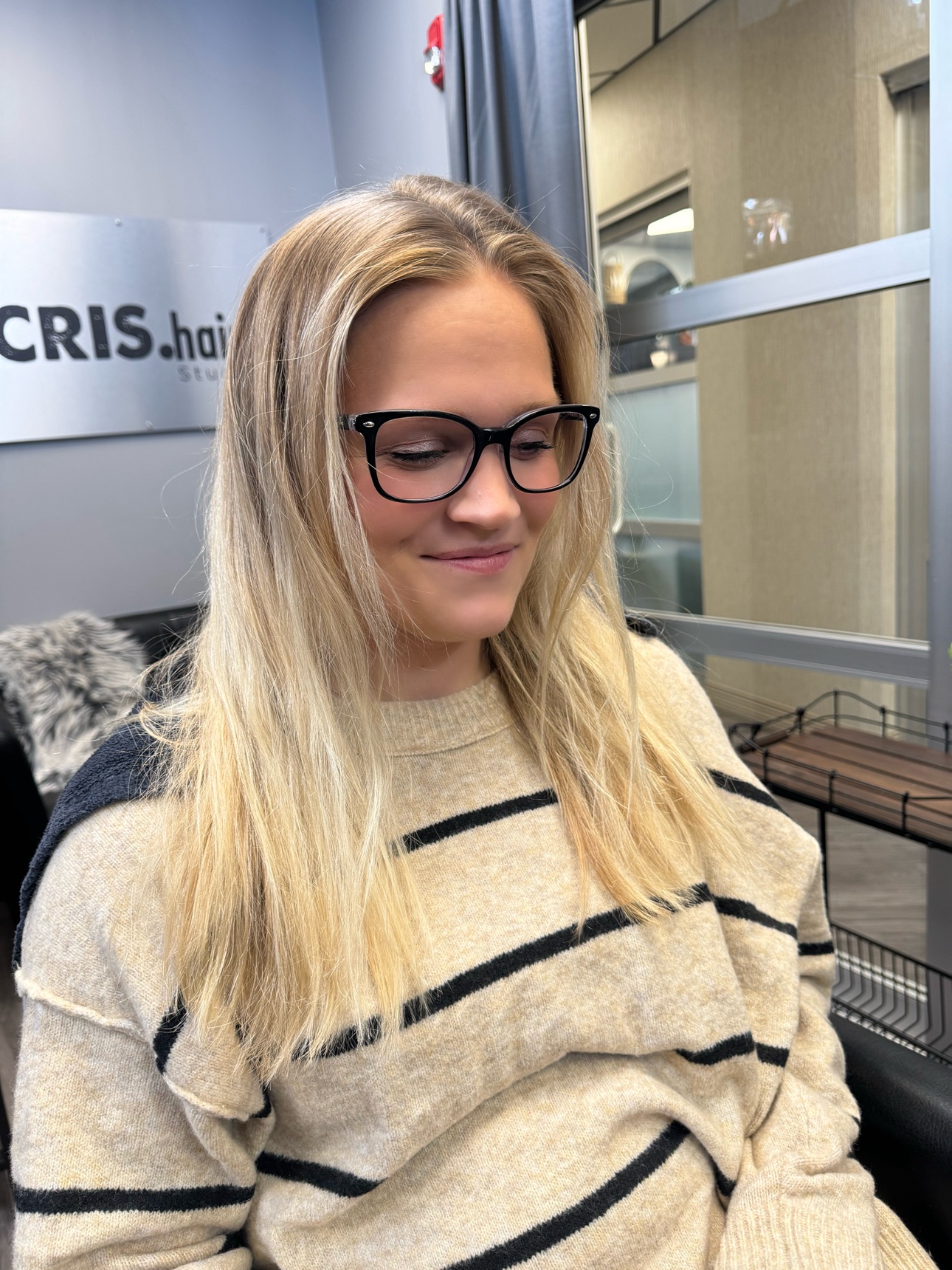
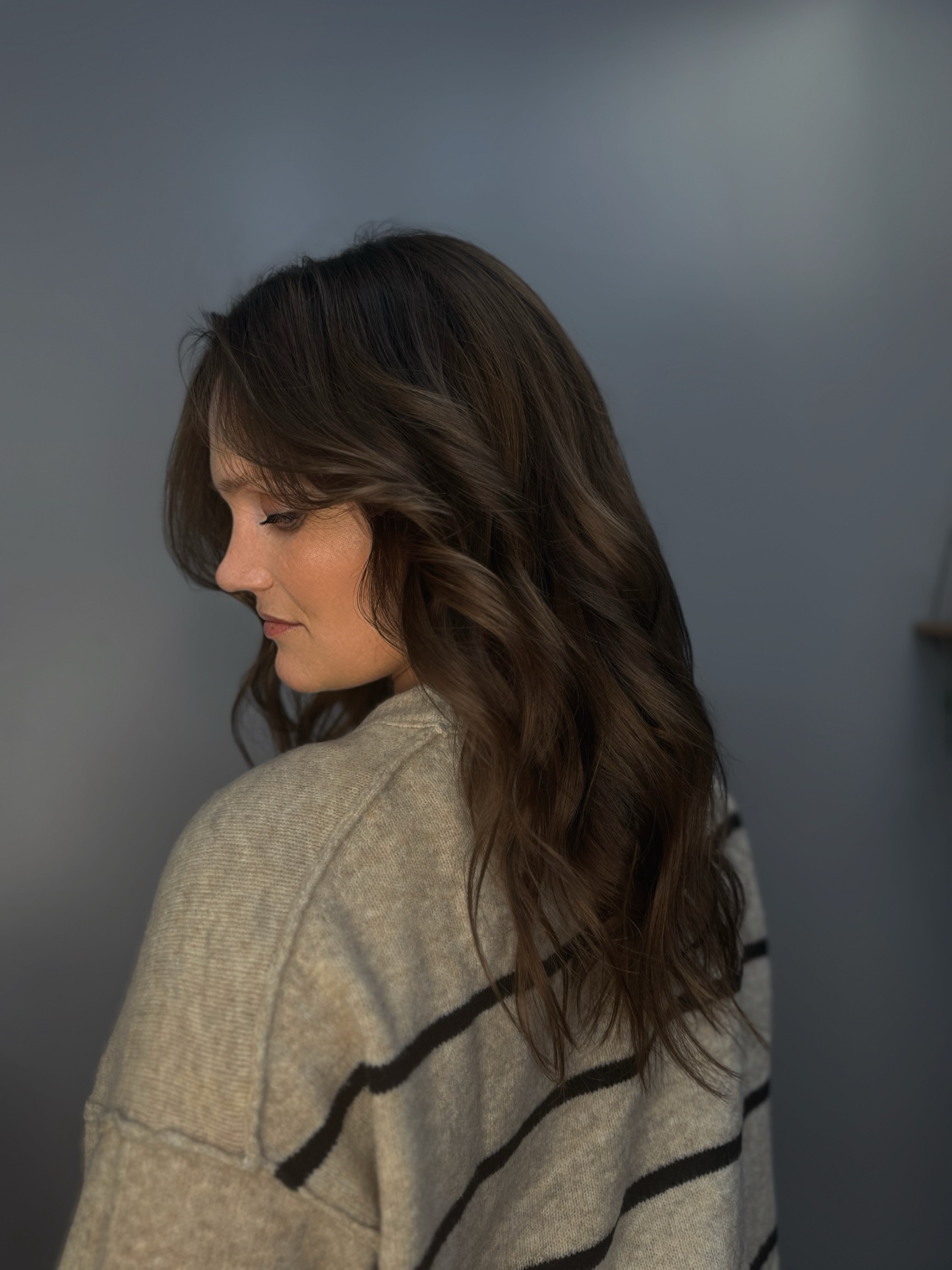
So we did not take her dark. We gave her depth back. Lowlights in a tone close to her natural color, placed where the sun would never put them, through the interior and underneath, keeping her brightest pieces around the face where they flatter her. A root melt to erase the line between her color and the color we built. And a gloss over everything to marry the tones. The after photos are the same woman, the same length, the same blonde pieces, with the depth restored underneath them. Her eyes do the talking now, not her hair. That is the difference dimension makes.
Rachel's transformation, filmed at this appointment. The stills from the same day are in this carousel.
If going richer for fall is your direction instead, my fall brunettes post walks through the mocha, brown butter and cherry cola versions of this same idea, and every color service is on the hair color page.
The signs your blonde went too far
Your hair looks lighter in photos than it feels in the mirror, and your face looks paler next to it. The color reads one flat note from root to ends, with no shadow anywhere. Your ends are fragile, because hair that has been lifted to its limit has nothing left to give. You are booking toners constantly and the tone never holds, because there is no depth underneath for it to hold onto. And the quietest sign of all: you keep saying you want to go blonder, because something feels off, when what you actually miss is contrast. If you nodded at two of those, you do not need more blonde. You need your depth back.
Why it grows out softly, and the honest maintenance
Because we build with your natural color instead of against it, reverse balayage grows out the way balayage was always supposed to: no line, no harsh root moment, just a gradient that gets softer. Most of my tone-down clients come back every ten to fourteen weeks for a refresh of the lowlights and a gloss, some stretch it further. At home, the upkeep is the tone, and my at-home gloss maintenance guide is the routine I give them: gentle washing, a weekly mask, and gloss before the depth can fade.
One honest boundary, because over-lightened hair has a history: if your hair is fragile, breaking, or has been through a lot of lightener and heat, we may start with a strand test before any color plan. It is fifteen quiet minutes that tell us exactly what your hair can hold. Rachel's hair, healthy under the blonde, did not need it. Yours might. That is not a delay; it is how the result lasts.
Frequently asked questions
What is reverse balayage?
Reverse balayage is a color service that adds depth back into over-lightened hair instead of lifting it further. The stylist weaves in lowlights close to your natural color and melts the root, so your remaining blonde becomes the accent in a dimensional gradient. No lightener is used.
Does reverse balayage damage hair?
It is one of the gentlest color corrections there is, because nothing is lifted. Deposit-only color and a gloss do not open the hair the way lightener does. Hair that is already fragile still gets assessed first, and sometimes a strand test, before any plan.
How long does reverse balayage last?
The grow out is soft because the design is built on your natural color. Most clients refresh lowlights and gloss every ten to fourteen weeks, and the gradient never shows a harsh line in between.
Will reverse balayage make me brunette?
Only if you want it to. The service is calibrated: we keep as much of your blonde as you love, usually the brightest pieces around the face, and restore depth underneath and through the interior. You leave dimensional, not dark, unless dark is the goal.
How is reverse balayage different from going darker all over?
An all-over dark color covers everything evenly and grows out with a visible line. Reverse balayage is placed: depth where it creates shadow, light where it flatters, and a melted root, so the result keeps dimension and grows out without a line.
Your Depth, Given Back
Book a color consultation in my private Malden studio and let us talk about what your blonde actually needs: sometimes it is less light, placed with intention.
Book a Color Consultation