
November 2026 · Hair Care
Heat Protectant: You Protect Your Skin, but You Fry Your Color
Blowout season is here, and the flat iron is working overtime. The damage is not the heat itself. It is the heat with nothing standing between it and your color.
By Cris, licensed cosmetologist and owner of CRIS HAIR
She sits in my chair every morning, in a way. Sunscreen layered like it is her job, serums in the right order, nothing left to chance. Then she goes home, clamps a flat iron at 450 degrees on freshly colored hair, with nothing on it. No protectant, no barrier, just heat on bare strands. I see the result weeks later: color that faded faster than it should, ends that snap, frizz that was not there in October.
Here is the professional truth: the problem is not that you use heat. I use heat on hair all day. The problem is using it unprotected, and hotter than your hair ever asked for.
What heat actually does to your hair
Hair is not built to take repeated high heat bare. Every pass of an iron on an unprotected strand drives out moisture, weakens the inner structure and lifts the cuticle, which is why the ends start breaking and why color molecules leave early. Stylists and the beauty press keep naming the same culprit: heat styling is one of the biggest causes of breakage and fading there is. The cruel part is that the damage is quiet. You do not feel it the day you do it. You feel it in January, when the color looks tired and the ends feel like straw.
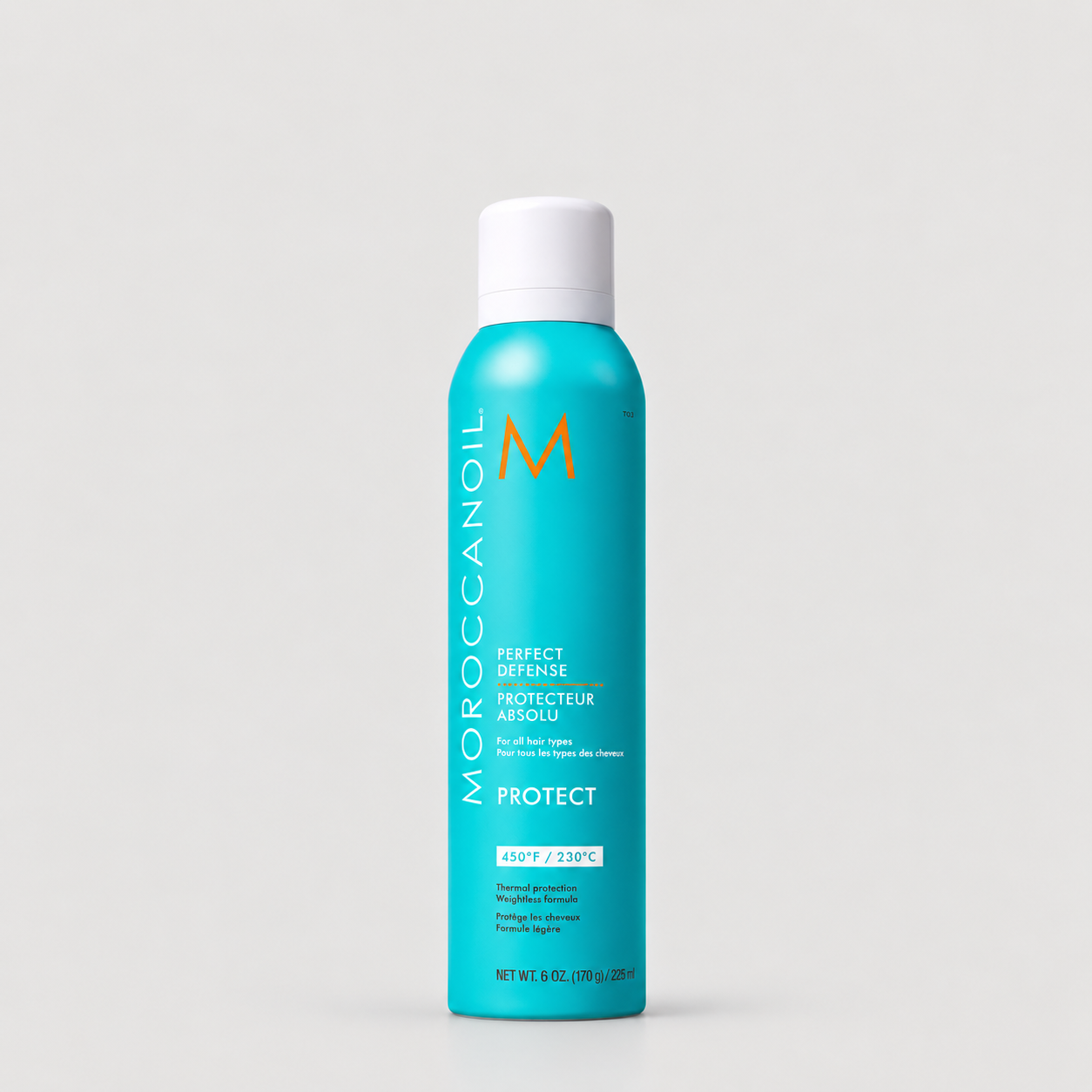
The hero: Moroccanoil Perfect Defense
The protectant I reach for is the Moroccanoil Perfect Defense Heat Protectant, made to guard hair up to 450°F. It goes on before the heat, every time: on damp hair before the blowout, and, this is the step almost everyone skips, again on dry hair before you re-pass the iron the next day. Yesterday's protectant does not cover today's iron. Each new heat session needs its own layer.
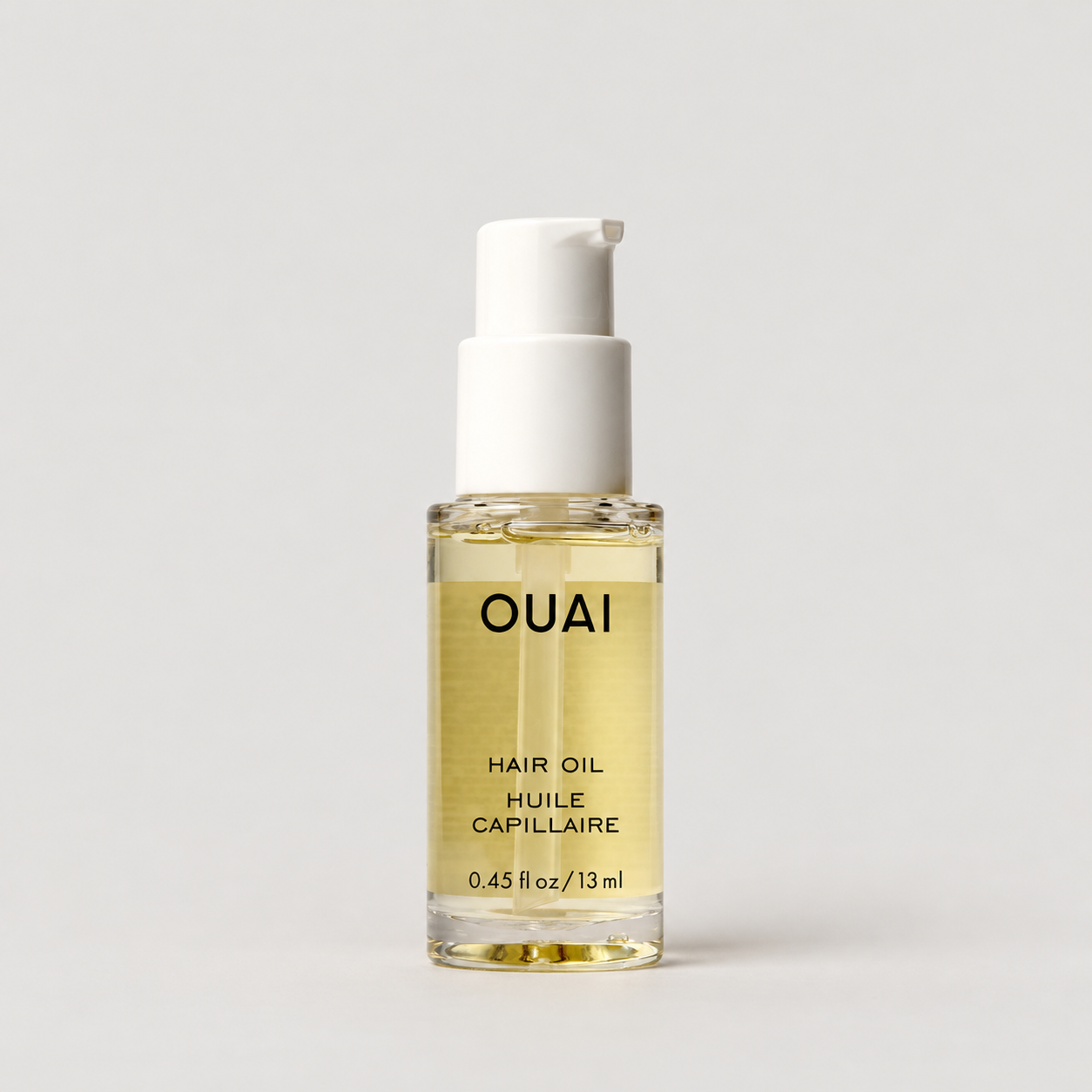
A light, even mist through the lengths and ends is enough. You are coating strands, not soaking them. Then dry, then style, and let the finish be the finish: a drop of OUAI Hair Oil worked through the ends at the very end, for shine and a last light layer of protection. Two products, two different jobs: the protectant stands in front of the heat, the oil closes the look after it.
The honest temperature talk
Almost nobody needs 450 degrees every day. That number is the ceiling of the tool, not a recommendation. Fine or fragile hair styles at far lower heat, and even thick hair rarely needs the maximum for a touch-up pass. The right temperature is the lowest one that gives you the result in one or two slow passes. Cranking the iron and passing six times is worse than a moderate iron passing twice. If your hair smokes or smells hot, that is not the product working. That is the hair asking you to stop.
Who needs this most
If your color is fresh, you are first in line, because heat is a shortcut to fading. If you are blonde, your hair is already sensitized from lightening, and heat lands harder. If your hair is fine or already damaged, there is less margin for error, and unprotected heat spends it fast. And if you are growing your hair out, remember what I tell every client who wants length: what you protect every day beats what you try to rescue later. My split ends guide is built on the same idea.
Shop the protection
Frequently asked questions
Do I need protectant if I only blow-dry, no iron?
Yes. A blow dryer at close range on wet, fragile hair is heat too, and wet hair is at its weakest. Protectant goes on before any tool that heats.
Can I apply it on dry hair the next day?
That is exactly when people forget, and exactly when it matters for iron touch-ups. A light mist on dry hair before re-passing the iron is the habit that saves second-day styling from becoming second-day damage.
Does protectant make hair greasy or heavy?
Not when the dose is right: a fine mist on lengths and ends, never a soak at the roots. If your hair feels coated, you used more than the strands needed.
Is one product enough, or do I need the oil too?
The protectant is the non-negotiable. The oil is a finishing layer, shine and softness after styling. If you buy one thing from this post, buy the barrier, not the gloss. My winter leave-in guide covers the daytime moisture that sits alongside this in a full routine.
My color already faded from heat. Can protectant fix it?
It cannot put color back; nothing in a bottle re-deposits what heat took out. It stops the loss from continuing, and a gloss in the chair is what brings the tone back. Protectant is prevention, and prevention is the cheaper appointment.
Protect the Color You Paid For
You invested in the color. Thirty seconds of protectant is how you keep it past December.
Get the Perfect Defense